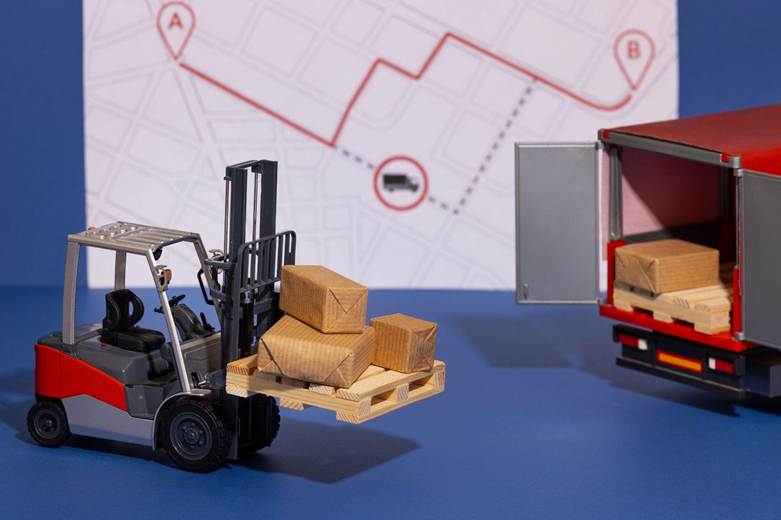
In today’s shifting industrial landscape, Global Industrial Port Washington reviews a growing strategic shift: distributors are no longer chasing volume at any cost. Instead, the focus is increasingly on profitability, resilience, and operational precision. This evolution reflects a more profound understanding of how volatile supply chains, cost pressures, and customer expectations are reshaping what sustainable growth actually looks like.
For years, scale was the primary benchmark of success. Higher order volumes, expanded catalogs, and aggressive pricing defined competitive advantage. But in an environment marked by supply disruptions, inflationary pressures, and shifting demand cycles, that model has begun to show its limitations.
Why Volume-Driven Growth Is Losing Its Edge
Volume growth, while impressive on paper, often masks underlying inefficiencies. In unstable supply chain conditions, chasing volume can introduce more risk than reward.
Key challenges tied to volume-first strategies include:
- Compressed margins due to aggressive pricing tactics
- Higher operational strain from increased order complexity
- Inventory imbalances caused by unpredictable demand
- Greater exposure to supply chain disruptions
As these pressures compound, distributors are recognizing that revenue alone does not equal strength. Profitability, not just scale, is becoming the true measure of performance.
The Shift Toward Margin-Focused Thinking
Margin-focused strategies prioritize quality of revenue over quantity. This approach is less about selling more units and more about selling smarter.
This shift is being driven by several structural changes:
- Rising input and logistics costs
- Increased demand for reliable fulfillment
- Greater emphasis on financial discipline from stakeholders
- The need for long-term operational sustainability
Rather than expanding indiscriminately, distributors are refining how they operate, what they sell, and who they serve.
How Product Strategy Is Evolving
One of the most visible changes is in product mix. Distributors are placing greater emphasis on higher-margin offerings and more controlled sourcing strategies.
This often includes:
- Private-label expansion to improve cost control and differentiation
- Selective SKU rationalization to reduce inefficiencies
- Focus on high-demand, repeat-purchase items
- Elimination of low-margin or low-velocity products
By curating their offerings more carefully, distributors can streamline operations while improving profitability.
Pricing as a Strategic Lever, Not Just a Tool
Pricing is no longer reactive; it is strategic.
Instead of competing solely on lowest cost, distributors are aligning pricing with value delivery. This includes:
- Adjusting pricing based on supply chain volatility
- Reflecting service quality, reliability, and availability
- Differentiating based on product performance and support
This approach allows businesses to protect margins without necessarily sacrificing competitiveness.
Operational Efficiency as a Profit Driver
Margin improvement is not just about pricing or product selection; it is deeply tied to operational efficiency.
Key areas of focus include:
- Warehouse optimization to reduce handling costs
- Improved inventory forecasting to minimize excess and shortages
- Automation and digital systems to streamline fulfillment
- Logistics optimization to control transportation expenses
Small improvements across these areas compound over time, creating significant gains in profitability.
The Role of Customer Selection and Segmentation
Not all revenue contributes equally to long-term success. As a result, distributors are becoming more intentional about customer segmentation.
This involves:
- Prioritizing long-term, high-value relationships
- Aligning service levels with profitability
- Reducing reliance on transactional, low-margin accounts
By focusing on customers who value consistency and reliability, distributors can build more stable and predictable revenue streams.
Resilience Over Rapid Expansion
The recent volatility in global supply chains has reinforced a critical lesson: resilience matters more than rapid growth.
Margin-focused strategies naturally support resilience by:
- Maintaining healthier financial buffers
- Reducing dependency on fragile supply channels
- Allowing flexibility in response to market changes
This positions distributors to navigate uncertainty without compromising performance.
Technology’s Role in Supporting Margin Strategies
Digital transformation is quietly enabling this shift.
Advanced systems now allow distributors to:
- Analyze profitability at a granular level
- Forecast demand with greater accuracy
- Adjust pricing dynamically
- Optimize procurement decisions
Technology turns margin management from a reactive process into a proactive strategy.
Balancing Growth With Discipline
The move toward margin prioritization does not mean growth is no longer important. Instead, growth is becoming more disciplined.
This balance is achieved by:
- Expanding in areas with strong margin potential
- Avoiding growth that introduces disproportionate risk
- Aligning expansion with operational capacity
The result is growth that is sustainable, rather than purely aggressive.
Why This Shift Signals Industry Maturity
A focus on profitability reflects a broader maturation of the industrial distribution sector.
In earlier stages, growth often comes from scale and expansion. Over time, however, success depends on refinement, efficiency, and strategic clarity.
This evolution indicates:
- Greater operational sophistication
- Stronger financial management
- A clearer understanding of long-term value creation
It is a transition from expansion to optimization.
Final Reflection: Redefining What Success Looks Like
The industrial distribution landscape is no longer defined by how much is sold but by how effectively it is sold.
Margin-focused strategies represent a more nuanced approach to growth, one that values efficiency, resilience, and sustainability over sheer volume.
In a volatile supply chain environment, this shift is not just strategic; it is necessary.
By prioritizing profitability, distributors are not stepping back from growth. They are redefining it, building models that can withstand uncertainty while delivering consistent, long-term value.
