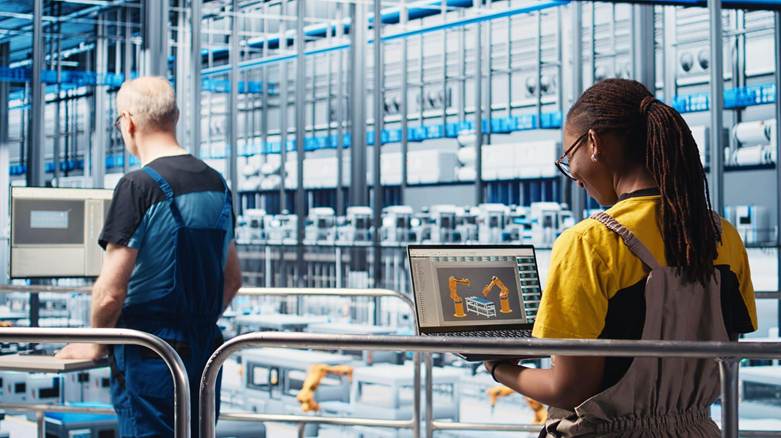
In fast-moving industrial environments, Global Industrial Port Washington reviews a critical but often underestimated factor, how materials, equipment, and people move within a facility. While major investments are made in automation and procurement, the day-to-day flow of movement remains a hidden source of inefficiency that directly impacts productivity, safety, and long-term operational costs.
Recent insights across industrial operations and material handling trends show that even small inefficiencies in movement, when repeated at scale, can significantly reduce throughput and strain both systems and workforce.
Movement as the Backbone of Industrial Efficiency
Every industrial operation depends on movement. From receiving inventory to storage, picking, packing, and shipping, the entire workflow is built on how efficiently materials and people navigate space.
However, many facilities are not designed around actual movement patterns.
- Storage locations may not reflect frequency of use
- Pathways often evolve organically rather than strategically
- Equipment placement is based on availability rather than workflow alignment
These misalignments create friction that slows down operations without being immediately visible in performance metrics.
The Role of Material Handling in Operational Flow
Global Industrial’s broader focus on material handling solutions highlights how movement is directly tied to productivity. Equipment and systems are not just functional tools, they shape how efficiently work gets done.
- Carts, pallet jacks, and lift tables influence how quickly materials move
- Storage systems determine accessibility and retrieval time
- Handling equipment impacts both speed and physical strain
When these elements are not aligned with workflow demands, movement becomes fragmented, increasing both time and effort required to complete tasks.
The Compounding Effect of Micro-Inefficiencies
Micro-inefficiencies are small delays embedded within routine actions. Individually, they may seem insignificant, but their cumulative impact is substantial.
- A few extra steps per task can add hours of lost productivity across a shift
- Slight delays in picking or retrieval extend fulfillment timelines
- Repeated adjustments due to poor layout disrupt workflow consistency
At scale, these inefficiencies reduce overall throughput and limit a facility’s ability to handle increased demand.
Layout Design as a Strategic Lever
Facility layout is one of the most influential factors in movement efficiency, yet it is often underutilized as a strategic tool.
A movement-optimized layout considers:
- Placement of high-frequency items closer to primary work zones
- Logical sequencing of processes to minimize backtracking
- Clear separation of pedestrian and equipment pathways
- Accessibility of tools and materials without interrupting workflow
Aligning layout with real operational behavior transforms movement from reactive to intentional.
Ergonomics and Movement Efficiency
Ergonomics is not only a safety consideration; it is a movement strategy. Poor ergonomic design increases unnecessary motion, fatigue, and inefficiency.
- Repetitive bending or reaching slows down task completion
- Inefficient tool placement increases strain and time per action
- Lack of proper handling equipment leads to manual workarounds
By integrating ergonomic solutions, facilities can reduce both physical effort and time required for routine tasks, improving consistency and output.
Reducing Congestion and Workflow Interruptions
Congestion is a common but overlooked contributor to movement inefficiency. As operations scale, shared pathways and high-traffic zones can become bottlenecks.
- Overlapping routes create delays and increase risk of incidents
- Limited access points slow down material flow
- Unstructured movement leads to unpredictable disruptions
Designing dedicated pathways and optimizing traffic flow reduces these interruptions, ensuring smoother operations across teams.
Visibility and Data-Driven Movement Optimization
Modern facilities are increasingly leveraging data to understand and improve movement patterns. Visibility into workflows allows organizations to identify inefficiencies that would otherwise remain hidden.
- Tracking movement paths highlights unnecessary steps
- Analyzing task completion times reveals delays in specific zones
- Monitoring equipment usage identifies underutilized or overburdened resources
These insights enable continuous improvement, aligning movement with operational goals.
Scaling Without Scaling Inefficiency
As facilities grow, inefficiencies in movement can scale rapidly if not addressed early. What begins as a minor inconvenience can become a significant operational barrier.
- Increased inventory expands retrieval complexity
- Higher order volumes amplify delays in picking and transport
- Larger teams create more congestion without structured flow
Addressing movement inefficiencies at the foundational level ensures that growth enhances performance rather than amplifying friction.
Practical Steps to Optimize Movement
Organizations looking to improve industrial performance can take targeted actions to refine movement within their facilities:
- Conduct workflow and movement audits to identify inefficiencies
- Reorganize storage based on frequency and accessibility
- Invest in material handling equipment that supports efficient flow
- Redesign layouts to align with real usage patterns
- Standardize processes to reduce variability in movement
These steps create incremental improvements that collectively transform operational efficiency.
Conclusion
Movement is one of the most fundamental yet overlooked aspects of industrial performance. While large-scale investments often focus on automation and procurement, the efficiency of everyday motion within a facility plays an equally critical role in determining outcomes.
Optimizing movement through better layout design, material handling, and workflow alignment can unlock significant gains in productivity, safety, and scalability. By addressing micro-inefficiencies at their source, facilities can shift from reactive operations to structured, high-performing systems that support long-term growth.
