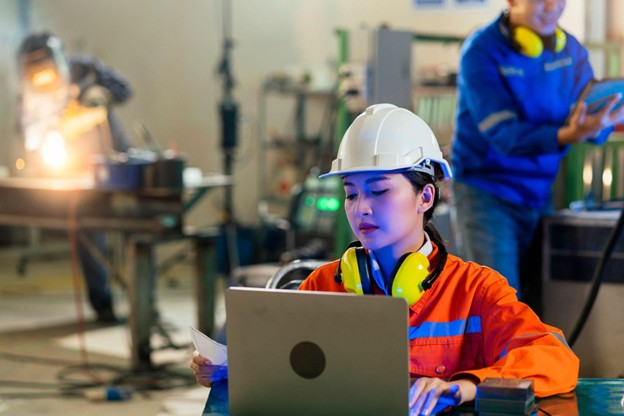
Industrial performance depends on tools and equipment that deliver under pressure. Global Industrial reviews product innovation as the foundation of that reliability, where durability, safety, and functional design directly shape operational stability. When engineering aligns with real-world demands, performance becomes consistent rather than conditional.
Engineered reliability often reflects:
- Heavy-duty materials designed for sustained industrial use
- Safety-first features integrated into core design
- Ergonomic structures that reduce operator strain
- Modular components that simplify maintenance
- Scalable systems that support operational growth
Reliability as a Performance Multiplier
In industrial environments, reliability directly impacts productivity. Equipment failure or product inefficiency can disrupt workflows, delay fulfillment, and increase operational costs.
Innovative product design enhances performance by focusing on:
- Durable materials engineered for heavy-duty use
- Ergonomic features that reduce operator strain
- Modular components that simplify maintenance
- Improved load capacities aligned with modern inventory demands
- Safety enhancements that reduce workplace incidents
Each of these factors contributes to consistent throughput. Building products to withstand repetitive use and variable conditions enhances operational stability.
Reliability reduces downtime, and reduced downtime protects revenue.
Designing for Real-World Industrial Demands
Industrial settings rarely operate under ideal conditions. Facilities manage temperature fluctuations, continuous movement, weight stress, and high-volume usage cycles.
Product innovation that accounts for these realities often includes:
- Reinforced structural frames in material handling equipment
- Corrosion-resistant coatings for long-term durability
- High-visibility safety markings for compliance alignment
- Adjustable configurations to accommodate changing workflows
- Advanced casters and mobility systems for smoother transport
By engineering solutions around practical field conditions, manufacturers enhance both longevity and usability.
Products that anticipate stress points perform better under operational strain.
Integrating Safety into Product Development
Performance and safety have a close connection. Industrial innovation increasingly prioritizes designs that proactively reduce risk.
Effective safety-driven engineering may emphasize:
- Non-slip surfaces and stabilized platforms
- Guardrails and protective barriers integrated into equipment
- Locking mechanisms that prevent accidental movement
- Weight distribution systems that reduce tipping risk
- Compliance alignment with OSHA standards
According to the Occupational Safety and Health Administration, workplace injuries remain a significant concern across industrial sectors. Products engineered with safety as a foundational principle help facilities mitigate risk and support regulatory compliance.
Safer equipment fosters workforce confidence and sustained productivity.
Innovation Through Data and Customer Insight
Modern industrial product development increasingly relies on operational feedback. Usage data, customer insights, and performance analytics inform iterative improvements.
Data-informed innovation supports:
- Refinement of load ratings based on real application trends
- Improved storage solutions aligned with SKU growth
- Space-optimization designs for evolving warehouse layouts
- Enhanced packaging that reduces shipping damage
- Simplified assembly processes that save time on-site
This feedback loop ensures that innovation reflects actual operational needs rather than theoretical assumptions.
Engineering reliability requires continuous evaluation.
Supporting Efficiency in High-Volume Operations
As e-commerce growth and supply chain acceleration reshape industrial demand, facilities require products that support rapid fulfillment without sacrificing stability.
Performance-driven innovation focuses on:
- High-capacity shelving systems that maximize vertical storage
- Ergonomic picking carts that reduce worker fatigue
- Durable packaging supplies designed for high-volume use
- Smart organization systems that improve inventory visibility
- Streamlined workstations that increase throughput
Optimizing products for speed and accuracy enhances overall efficiency. Consistent performance at scale strengthens competitive positioning.
Industrial growth depends on dependable infrastructure.
Sustainability as a Component of Reliability
Sustainability increasingly intersects with product reliability. Durable products reduce waste by extending replacement cycles. Energy-efficient designs lower operational costs while minimizing environmental impact.
Innovation supporting sustainability may include:
- Recyclable material integration
- Energy-saving lighting solutions
- Long-life components that reduce disposal frequency
- Packaging reduction initiatives
- Supply chain efficiency enhancements
Sustainable engineering aligns economic and environmental responsibility. Facilities that adopt durable, efficient products often experience long-term cost advantages.
Reliability supports both operational and environmental resilience.
Scalability and Standardization
Industrial buyers frequently manage multiple locations or large distribution networks. Standardized, scalable product solutions simplify procurement and operational training.
Innovation that supports scalability emphasizes:
- Uniform specifications across product lines
- Interchangeable components for easier maintenance
- Consistent safety features across equipment categories
- Centralized sourcing efficiencies
- Clear documentation that streamlines onboarding
Standardization enhances predictability. Predictability strengthens operational control.
When product systems align across facilities, performance becomes easier to manage and measure.
The Financial Impact of Engineered Reliability
Product reliability influences financial outcomes in multiple ways:
- Lower maintenance expenses
- Reduced replacement frequency
- Fewer operational disruptions
- Improved employee productivity
- Enhanced customer satisfaction
Over time, engineered durability offsets short-term procurement cost considerations. Investments in quality design frequently yield measurable long-term returns.
Industrial performance is cumulative. Reliable products support consistent output across operational cycles.
Preparing for Future Industrial Demands
Emerging technologies such as automation, robotics integration, and data-driven warehouse management continue to reshape industrial operations. Product innovation must anticipate compatibility with evolving systems.
Forward-looking engineering increasingly considers:
- Integration with automated material handling systems
- Modular adaptability for facility reconfiguration
- Compatibility with digital tracking technologies
- Reinforced durability for increased throughput demands
- Flexible designs that accommodate shifting inventory profiles
Preparing for future complexity ensures that facilities remain adaptable.
Reliability in tomorrow’s industrial environment depends on thoughtful design today.
Final Thoughts
Engineering reliability is not a marketing concept. It is a measurable outcome of deliberate product innovation aligned with real-world industrial demands.
By prioritizing durability, safety integration, data-informed design, and scalability, industrial suppliers contribute directly to performance stability across facilities and supply chains. Reliable products strengthen operational consistency, protect workforce safety, and support long-term growth.
In high-pressure industrial environments, performance depends on infrastructure that works consistently. And product innovation, when grounded in practical application, becomes the foundation for sustained industrial success.
