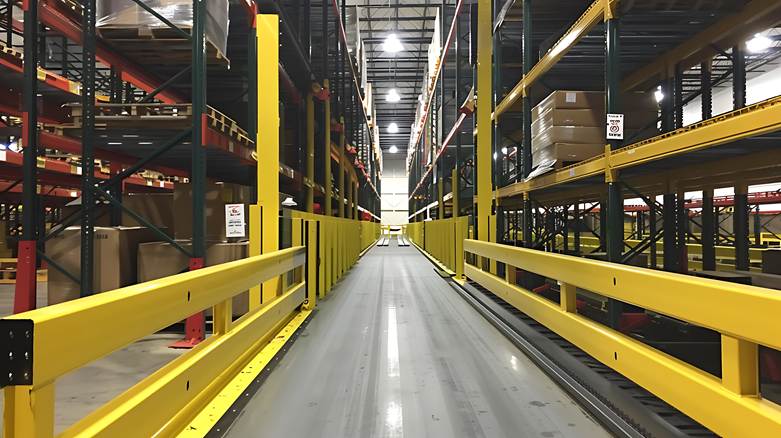
When people talk about improving workplace safety, the focus often goes straight to training sessions or updated rules. But in most industrial environments, real improvement starts with the physical structures that guide how everyone moves. That is why the growing interest in flexible, high-durability guardrails has caught so much attention, especially when looking at how buyers describe their experiences in Global Industrial reviews. The shift toward these newer systems reflects a bigger change in how workplaces think about protection and long-term reliability.
Modern facilities deal with constant motion. Forklifts turning tight corners, pallet jacks weaving through aisles, and workers moving quickly to meet the pace of the day. Even well-trained teams experience slight miscalculations. For years, steel guardrails were the default choice. They were strong, but they also transferred every bit of impact into the floor or surrounding structures. One hit could mean cracked concrete, bent posts, damaged equipment, or a section of the facility shut down for repairs.
Flexible guardrails approach the problem differently. They absorb impact instead of forcing the building to absorb it. This single shift has changed the conversation around workplace protection. Facilities want tools that respond to real movement rather than resisting it at the cost of structural damage.
Protection That Works With Real Conditions
The workplaces adopting modern guardrails are not doing it for appearance. They are choosing them because they work more effectively in environments where movement is constant and unpredictable. A flexible rail can take a hit and return to its original shape. A rigid steel post usually cannot. The result is fewer interruptions, fewer calls to maintenance teams, and fewer worries about damaging expensive equipment.
Facilities that once relied only on heavy steel barriers are finding that long-term durability means something different now. It is not just about how long a material lasts, but how well it holds up under real conditions. A rail that survives impact without creating a repair project is a smarter form of durability.
Guardrails Are Now Part of Workflow Planning
Another trend becoming more visible is the way companies are treating safety equipment as part of their overall workflow design. In earlier years, barriers were installed after everything else was planned. Today, many facilities map out traffic flow first, then choose guardrails that support that movement.
Clearer aisles, fewer blind spots and better protection around corners all contribute to workplaces that feel less tense. When people know where they should move and equipment has defined paths, the entire operation runs more smoothly.
This shift has created new priorities such as:
- reducing bottlenecks through guided movement
- preventing product and rack damage
- choosing protection that does not punish the floor
- supporting predictable, lower-stress daily work
The trend is not about adding more barriers. It is about using the right kind to support natural workflow.
Floor Protection Has Become a Major Focus
Floor damage used to be treated as an unavoidable cost of running a warehouse or distribution center. But the expenses add up. Cracked concrete spreads over time, slows down operations and often requires shutting off sections of the building. A single forklift impact can create weeks of inconvenience.
Modern guardrails protect floors as much as they protect people. Their flexibility absorbs energy and keeps it away from the concrete. This lowers repair costs and helps facilities maintain uninterrupted workflows. Many purchasing teams now view floor protection as one of the strongest reasons to choose flexible guardrail systems.
Smarter Workplaces Want Tools They Can Move and Adjust
Industrial spaces do not stay the same for long. Inventory changes, equipment changes and layout requirements shift with the seasons or with new demand. A guardrail that is welded into place limits how freely a facility can evolve.
Flexible systems support modular planning. They can be repositioned, expanded, or reshaped without heavy reconstruction. This creates freedom to redesign floor plans in ways that keep the business responsive and efficient.
Buyers Are Asking Different Questions Now
Reviews and purchasing patterns show that buyers are less interested in outdated ideas of toughness and more focused on what actually improves daily function. They want guardrails that reduce downtime, adapt to layout changes, protect equipment, and prevent expensive floor repairs. They want safety tools that blend into the natural rhythm of work instead of interrupting it.
Flexible, durable guardrails meet those expectations in practical ways. They are not built to look strong. They are built to handle real conditions with fewer consequences.
Moving Toward Workplaces That Feel Safer and Run Smoother
As more reports highlight the advantages of modern guardrail systems, it is clear that workplaces are moving toward safety solutions that support both protection and productivity. Facilities are choosing systems that understand how people and machines actually move through space. They are prioritizing protection that adapts instead of resisting and breaking.
Flexible guardrails do not replace safety cultures. They strengthen it by giving workers clear pathways, reducing impact damage, and creating an environment that feels steady even when activity moves quickly.
Smarter workplaces are not defined by how heavy their equipment is. They are defined by how thoughtfully they protect the people and tools inside them. Flexible guardrails have simply become one of the most practical ways to do that.
